
Need advice?
Need advice? Call or WhatsApp us, and you’ll get a reply within 5 minutes!
- (86)-0532-012345678
- 15112345678
- disa@disachina.com
Get in touch
Leave your details below and one of our specialists will be in touch as soon as possible.
Belt conveyor system Recovery Blast Room
The belt conveyeor system recovery blasting room is equipped with a grated groove on the floor. Spent abrasives fall into the groove, are metered and fed onto the belt conveyor, which then transports them to the cleaning unit. The system can be flexibly configured for full-floor or partial-floor recovery, featuring a simple structure and low maintenance costs.
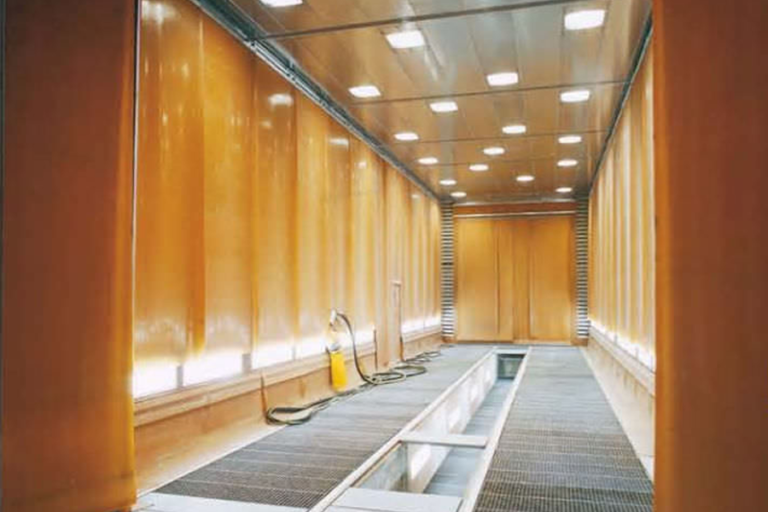
Belt conveyor system Recovery Blast Rooms are suitable for medium and large-sized sandblasting rooms and working conditions with large abrasive consumption. After the abrasives fall to the bottom of the room by gravity, they are collected and transported by wear-resistant belts, achieving the operating effects of high abrasive recovery rate, low energy consumption, and low noise.
A standard belt conveyor recovery system comprises a recovery hopper, floor grating, a roller motor for each conveyor belt, a bucket elevator, and an air-classifying abrasive cleaner.
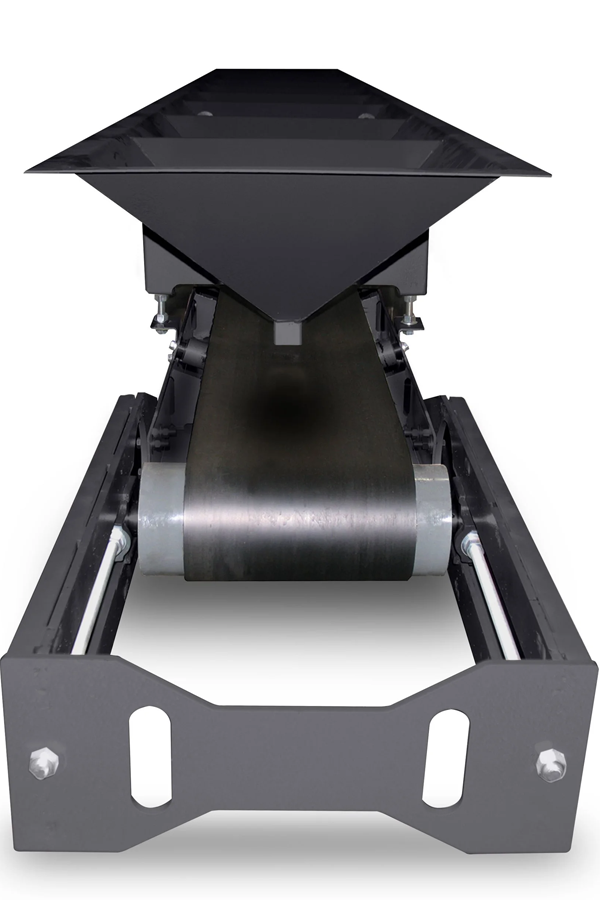
The belt conveyor recovery system is fitted with multiple floor collection hoppers in the blast room floor trench. Partial-area systems can be arranged as a single run, H/L/U-pattern or custom layout for the application. Hoppers are covered by floor gratings flush with the blast room floor. Abrasives fall through the grating into the hoppers, then via a metering tube onto the underlying 12-inch wide belt. The spacing between the hopper’s metering tube and the conveyor belt is set for optimal media flow to prevent belt overload.
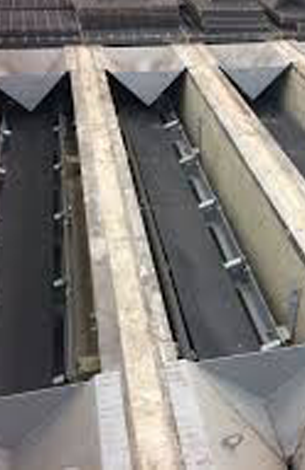
Each conveyor belt is driven by a 2-horsepower drum motor, which conveys the materials to the bucket elevator, and then transfers them to the grinding cleaner. The inclined rollers under the conveyor belt form a V-shaped support to restrict the abrasive materials on the conveyor belt.
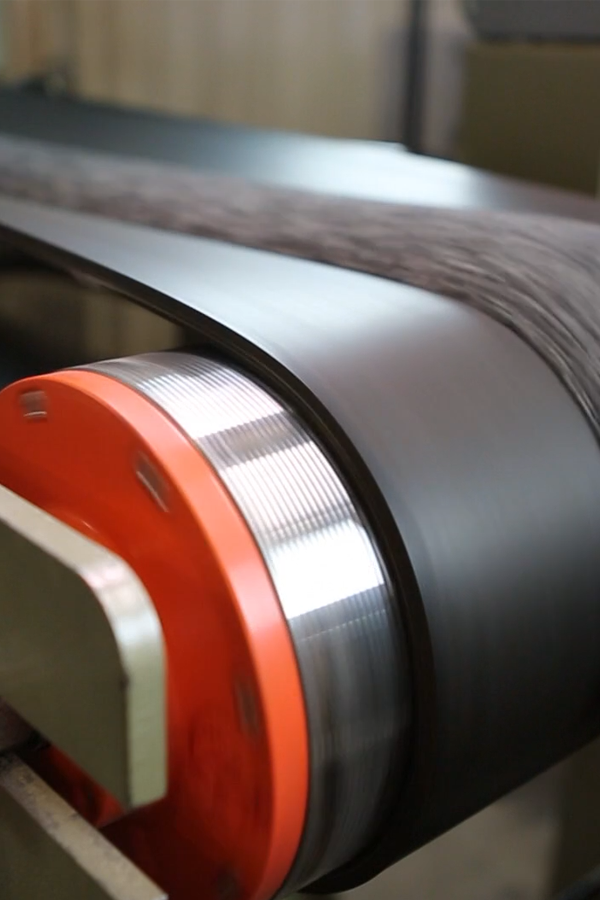
Adjusting the drive and bend pulleys is critical for correcting belt deviation. A belt conveyor is fitted with 2–5 pulleys, all of which must be installed perpendicular to the conveyor’s longitudinal centerline
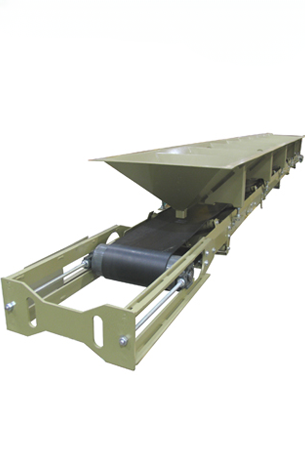
Tensioner position adjustment is critical for correcting conveyor belt deviation. For counterweight tensioners, the two upper bend pulleys must be perpendicular to both the belt’s longitudinal direction and the vertical gravity line, ensuring horizontal axial centerlines. For screw or hydraulic cylinder tensioners, the two bearing blocks of the tension pulley must be synchronously translated to keep the pulley’s axis perpendicular to the belt’s longitudinal direction.
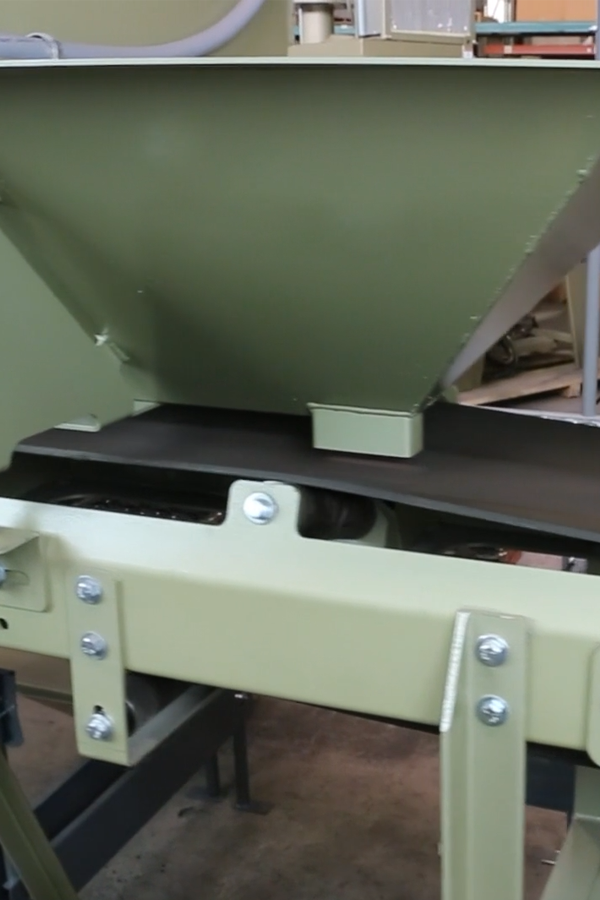
Tensioner position adjustment is critical for correcting conveyor belt deviation. For counterweight tensioners, the two upper bend pulleys must be perpendicular to both the belt’s longitudinal direction and the vertical gravity line, ensuring horizontal axial centerlines. For screw or hydraulic cylinder tensioners, the two bearing blocks of the tension pulley must be synchronously translated to keep the pulley’s axis perpendicular to the belt’s longitudinal direction.
View these real-life examples
More information?
Ask our advisers your questions by telephone, WhatsApp or via email (button below).
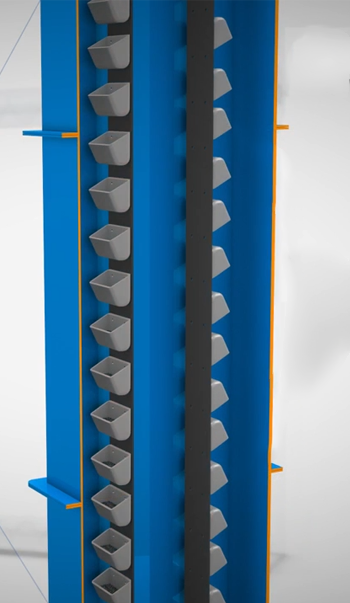
Collection hoppers are made of rugged 10-gauge steel for excellent wear resistance and long service life. Each hopper bank is equipped with a heavy-duty multi-ply endless belt—driven by an electric drum motor and fabricated for wear resistance. The robust bucket elevator assembly features a reinforced PVC belt and tough, lightweight polyethylene buckets.
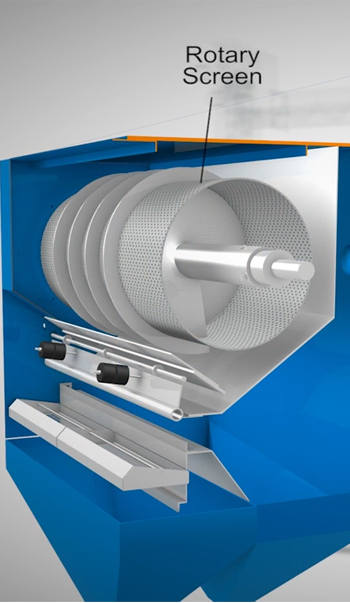
Abrasive falls from the belt into the bucket elevator hopper. Sturdy buckets lift it to the air-wash cleaner for separation from dust and debris. Debris drops into a waste container, dust is drawn into the dust collector, and clean reusable abrasive falls into the blast machine’s top hopper.
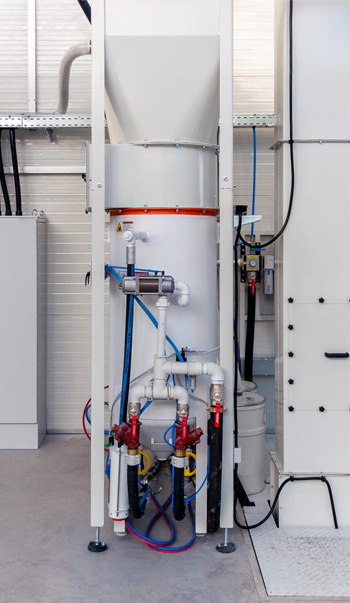
Free-standing hopper reinforced with structural steel. Positions above the blast tank assemblies to provide easy access for maintenance.
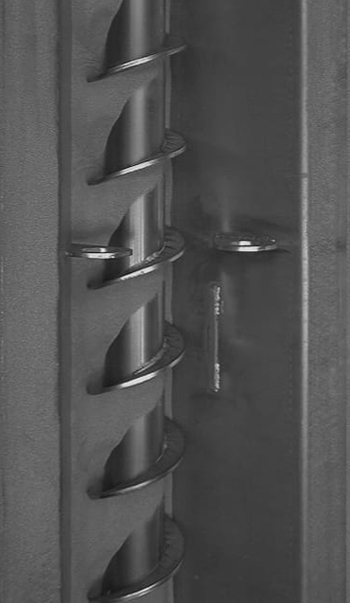
Heavy-duty screws return the abrasive to the separator/classification system.Stanrd screws are 9″in diameter which consists of a 5″diameter schedule 40 pipe wrapped with 1/4″thick fighting on a 2/3 pitch.